Sunday, Jul 19, 2026
Follow Us:
Follow Us:
Mukund, in Chitrakoot, for Water Watch
Chitrakoot is situated at an average elevation of approximately 207 meters (about 680 feet) above sea level. Upon reaching Brahmakund—the source of the 'slain' Payaswini River—even more questions began to surface in my mind. I kept wondering: could it be that the Payaswini River is, in fact, merely another name for the Mandakini River? In Chitrakoot, most local residents affectionately refer to the Payaswini as 'Maa Paisuni' (Mother Paisuni). I searched Google for an answer to this query. I felt a sense of exasperation upon seeing what was written there. This was because the assertion—that the Paisuni is merely another name for the Mandakini, as claimed by Google—is entirely false. Thousands of people who have actually seen this Paisuni River can still be found in Chitrakoot today. A significant number of such individuals reside in the Chitrakoot regions of both Uttar Pradesh and Madhya Pradesh. I mention Uttar Pradesh and Madhya Pradesh specifically because, geographically, Chitrakoot is divided between the Satna district of Madhya Pradesh and the Chitrakoot district of Uttar Pradesh.
A report published on the website of the *News 18* channel on February 15, 2022, provides ample grounds to validate the existence of the Payaswini River. The report states that a watercourse—dating back thousands of years—has been discovered originating from the Kamadgiri Mountain. This is no ordinary watercourse; it serves as the lifeline of the Mandakini River, a waterway deeply intertwined with the spiritual faith surrounding Lord Rama. The National Green Tribunal (NGT) has also taken strict action regarding the disappearance of two sacred rivers in Chitrakoot (Satna district)—the Payaswini and the Saryu—due to illegal encroachment. While hearing a petition filed for their preservation, the NGT directed the Collector of Satna to demarcate the banks of these rivers. Furthermore, the NGT ordered that all illegal encroachments be cleared from any land recorded in the revenue records as belonging to the government or the river itself. Currently, 18 residential structures fall within the zone of encroachment; removing them now poses a significant challenge for the administration.
Across the entire country, the Mandakini River is revered as sacred—much like the Ganges—yet this river has run dry. Historically, the Mandakini was fed by watercourses flowing from the hills of Sati Anusuya as well as from the natural springs of Mount Kamadgiri. However, environmental exploitation and encroachment have caused the river's ancient sources to dry up. These sources have now been rediscovered, and efforts have begun to channel their waters back into the Mandakini; the administration is currently grappling with the challenge of clearing the encroachments that obstruct this path.
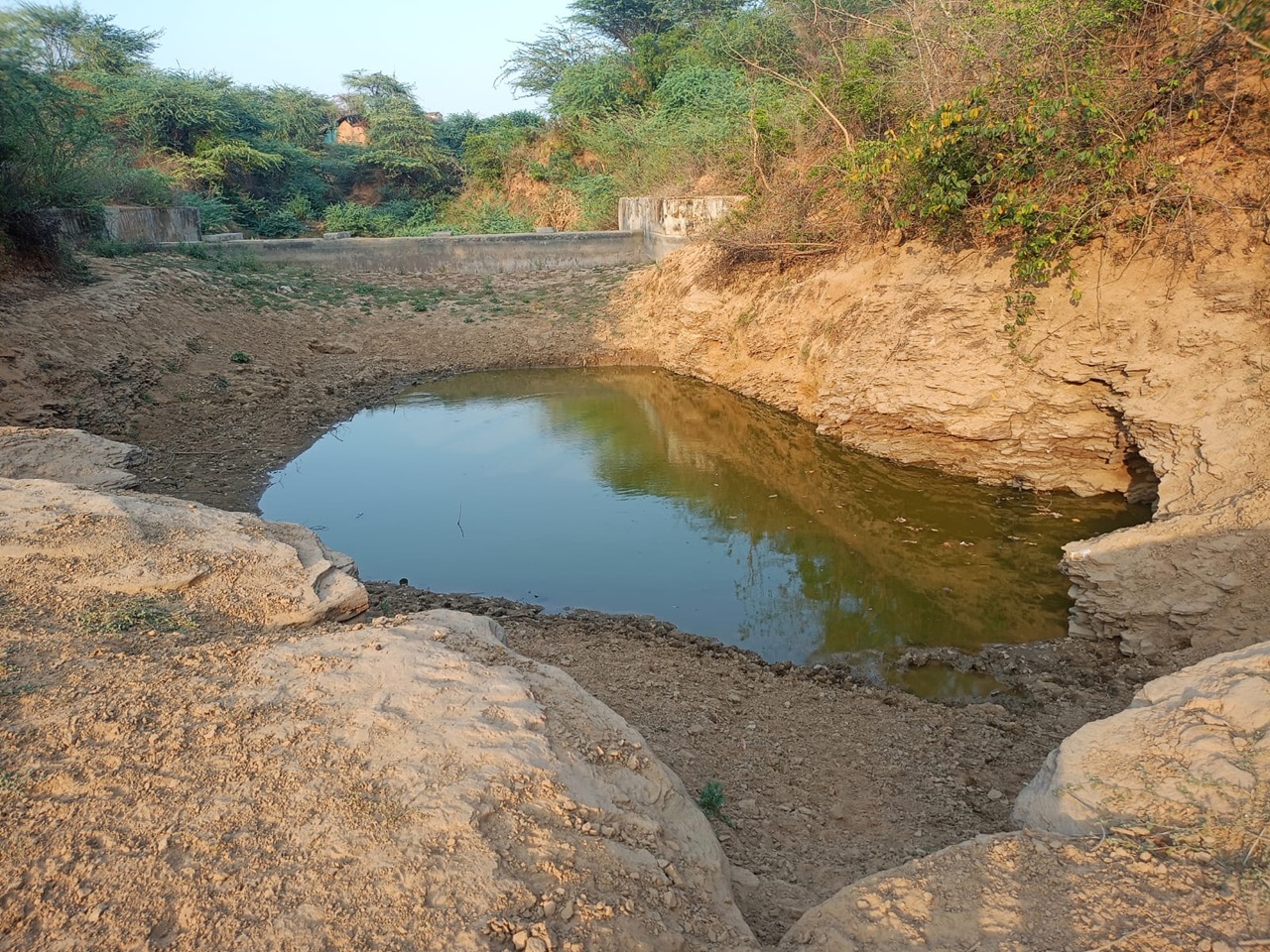
Water conservationists working in the Bundelkhand region believe that Mount Kamadgiri was once the source of the Payaswini River. This river had subsequently vanished. Now, however, the watercourse of this ancient river has been rediscovered. Fed by the natural springs of the Payaswini, the water level in the *Brahmakund*—a sacred tank situated below—is steadily rising. The administration has also launched a campaign to conserve this river; excavation work for the construction of a check dam is currently proceeding at a rapid pace. With the return of the water flow, devotees traveling from far and wide have begun arriving to offer their prayers at the *Brahmakund*.
P.C. Tripathi, the Sub-Divisional Magistrate (SDM) of Majhgawan (Satna), has taken the initiative to reconnect this watercourse with the Mandakini River. Swami Madan Gopal Das, the spiritual head (*Maharaj*) of the main entrance (*Pramukh Dwar*) at Chitrakoot Kamadgiri, has held meetings with various saints to discuss this matter. Several social activists have also joined the campaign to restore the Payaswini River to its former glory. Rambabu Tiwari—a water activist and research scholar in Bundelkhand—asserts that if the Mandakini is to be saved, the Payaswini must be revitalized. He emphasizes that extensive excavation and desilting efforts along the entire course of the Payaswini are absolutely essential. To facilitate the restoration of this river to its original state, several JCB excavators have been arranged on a voluntary basis; furthermore, support is being sought from both the government and the local administration. This report concludes at this juncture. As for what transpired subsequently—the outcome is now painfully evident: the Payaswini River has ceased to exist. Much like Bhagiratha, who brought Mother Ganga down to Earth, there is a need today for a similar ascetic figure—one capable of shattering the obstacles that currently block the path of the Payaswini River. In principle, the Chief Ministers of both Uttar Pradesh and Madhya Pradesh should face no difficulty in assuming the role of Bhagiratha for this noble cause—this *Ram-kaj* (divine mission). The challenge, however, lies in determining who will convey this plea from 'Water Watch World' to their ears.
The official website of the Uttar Pradesh government (chitrakoot.nic.in) acknowledges that the Payaswini River—also known as the Paisuni—which flows through the Chitrakoot region (spanning Uttar Pradesh and Madhya Pradesh), is prominently cited as a sacred river in the *Srimad Bhagavatam*, the *Varaha Purana*, and the *Valmiki Ramayana*. Within the *Srimad Bhagavatam*—specifically in the *Ekatmata Stotra* and the Fifth Canto (*Skandha*)—this holy river is enumerated among India's most significant pilgrimage rivers. The *Varaha Purana* offers a detailed exposition on the glory of the Payaswini and the Chitrakoot region, as well as the spiritual merits accrued from performing ritual baths and acts of charity at this site. While the *Valmiki Ramayana* primarily describes the Mandakini River, local tradition holds that the Payaswini is, in fact, the true name of the Mandakini—or perhaps one of its tributaries. Furthermore, Goswami Tulsidas makes a highly poetic reference to this river within the *Ayodhya Kand* (Book of Ayodhya) of his epic, the *Ramcharitmanas*, in the context of the Chitrakoot episode. It is believed that this river manifested through the sheer spiritual power (*tapobal*) of the ascetic Sati Anusuya, and it flows in the vicinity of the Kamadgiri Mountain.
The Payaswini—or Paisuni—River remains a profound subject of both popular faith and mythological significance. Chitrakoot itself is revered as the "Tirthon ka Tirth" (the ultimate pilgrimage site—the pilgrimage of all pilgrimages). Since time immemorial, the Chitrakoot region has served as a vibrant epicenter of inspiration for cosmic consciousness. Thousands of monks, *sadhus*, and saints have attained elevated states of spiritual realization here, exerting a benevolent influence upon the world through their rigorous penance (*tapasya*), spiritual practice (*sadhana*), Yoga, and various other arduous spiritual endeavors. Maharishi Atri—the son of Lord Brahma—along with Mata Anasuya, Dattatreya, Maharishi Markandeya, Sarabhanga, Sutikshna, and various other sages, saints, devotees, and thinkers spent their entire lives in this region. It is believed that many such sages continue to engage in penance to this day within the various caves and other areas of this region. The Mandakini River—which lends glory to Chitrakoot—eventually merges into the Yamuna River at Rajapur, the birthplace of the great poet Tulsidas. It is also believed that every year, Prayagraj himself comes to bathe in the Mandakini River to wash away his sins.
Legend has it that during the Treta Yuga, Lord Shri Ramchandra visited Chitrakoot during his period of exile in the forest. Before doing so, he first sought permission from the Emperor of Emperors, Shri Matyagajendra Nath Swami Ji. Subsequently, he spent approximately eleven and a half years here. It is also said that when Lord Ram performed the *Shraddh* ceremony for his father, all the gods and goddesses arrived in Chitrakoot to partake in the *Shuddhi Bhoj*—a purification feast traditionally hosted for all relatives and friends on the thirteenth day following a death in the family. They were so captivated by the beauty of this place that they were unwilling to depart. Understanding Lord Ram's desire that they remain—and acting in accordance with His wishes—the family preceptor, Sage Vashishtha, "forgot" to recite the *Visarjan* (departure) mantra. Consequently, all the gods and goddesses adopted this place as their permanent abode and remain eternally present here.
Chitrakoot is a serene region situated in the northern reaches of the Vindhya Range. Every month, on the day of *Amavasya* (the New Moon), hundreds of thousands of devotees flock to this site. *Somvati Amavasya*, *Diwali*, *Sharad Purnima*, *Makar Sankranti*, and *Ram Navami* mark particularly auspicious occasions for celebrations here. *Kamadgiri*, *Hanuman Dhara*, *Janaki Kund*, *Lakshman Pahari*, and *Devangana* are the renowned sacred hills of this region.
1- Source: chitrakoot.nic.in
2- Source: https://hindi.news18.com/.../chitrakoot-mandakini...
Send feedback
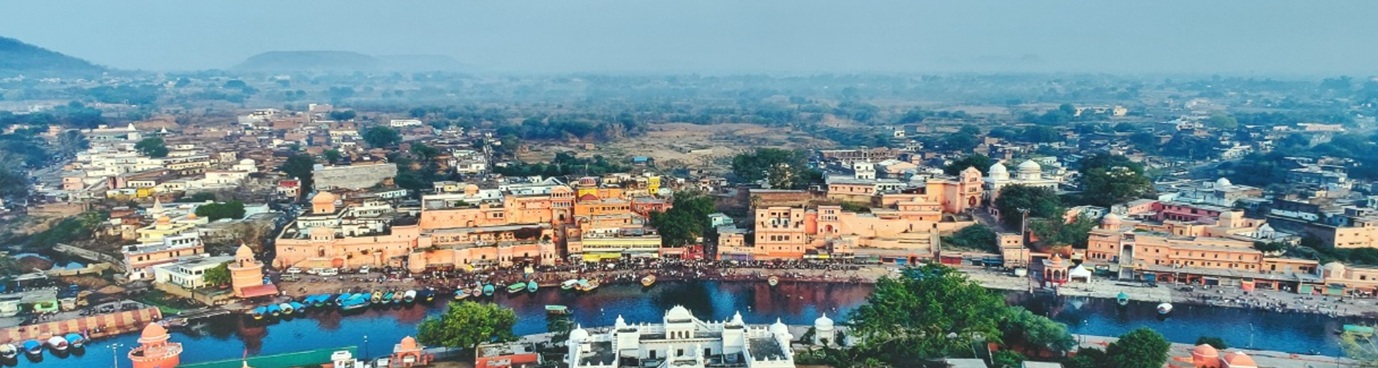 यह चित्रकूट का रामघाट है। फोटो साभार- chitrakoot.nic.in
 यह चित्रकूट का रामघाट है। फोटो साभार- chitrakoot.nic.in
Follow Us: